
Special fumigating products, which release toxic gases like aluminium phosphide or carbon bisulphate, which are either in tablet or liquid form obtained from hardware outlets and garden centres, are more likely for rodent control in agriculture.
Moles in the Marina include Duthie’s Golden Mole which is listed by the IUCN as vulnerable, while the Hottentot Golden Mole is widespread in the Eastern Cape. They feed on insects and snails and are more attracted by such soil pests present in the roots of plants, than by the actual roots. They are completely blind and rely on their hearing and smell to capture prey. They are sometimes referred to as ‘surface moles’ and are more active during wet seasons.
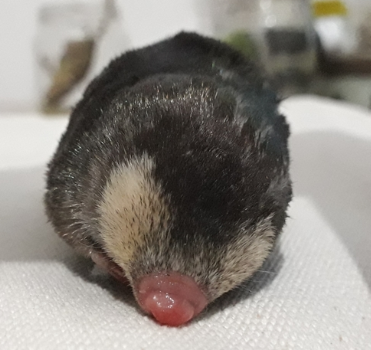
Adams, C. [Picture} From: https://www.inaturalist.org/taxa/42498-Chlorotalpa-duthieae/browse_photos
Burrows of the Golden moles are visible on the surface as a low ridge and they do not create large soil mounds. These mounds are the work of the Cape Mole-rat.
Golden moles often share the burrows of the mole-rat, resulting in toxins repelling or killing the mole-rat may have the same effect on golden moles.
In the Marina Martinique, we all strive towards a balance system where man and nature can thrive together. Following a non-toxic mole repelling strategy can chase these ‘pests’ out of the garden and back to its original habitat.

Knox, A. (2025). [Picture] From: https://www.inaturalist.org/taxa/43761-Georychus-capensis
Home remedies do take a bit more effort and more frequent application, but in the end, it contains similar ingredients to the very expensive eco-friendly repellents found on the internet or in garden stores. They have to be used repeatedly to chase the moles towards an area where they will not feel trapped (that is away from permanent structures) and towards proper feeding grounds.
These remedies may prove worth the effort:
- Garlic extract and castor oil
- Chilli extract, cayenne pepper, Tobasco sauce mixed in with above mixture
- Peppermint oil combined with the garlic mixture
Moles get diarrhoea from consuming castor oil, while the chilli or cayenne pepper cause an unpleasant burning feeling on the mole’s mouths as they move along the soil.
Tobasco sauce is readily available in many homes, and it can serve its purpose in getting rid of moles. Dabbing cotton balls in this mixture and leaving them in the infested area will surely make them hurry out of the burrows and out of our lives.
To create the castor oil mixture:
- Mix 30ml (2tbl spoons) of any dishwashing liquid with 120ml (half cup) of castor oil.
- Add 2 cloves of crushed garlic to the mixture.
- Dilute this mixture in 4-4,5 litres of water.
To apply:
- Level the mole heaps and wait to see where the next heaps appear.
- This allows you to work out in which direction they are moving.
- Form a half-moon shaped ‘barrier’ of soil on the opposite side to the direction you want to chase them, very close to the active tunnels.
- The barrier should be drenched with the mixture.
- The soil must be loose when drenching it with repellents
- It does not help just to pour it down the openings of active tunnels.
- Level any mounds that appear again the next day
- If the moles have moved on a metre or two, repeat the drenching process just behind them, close to the new active area.
- You have to drench the soil close behind the active tunnels every day or at least every second day, always making sure they are not trapped by permanent structures.
- In this way you can patiently chase them away from your garden, until they are eventually chased out of your suburb, hopefully to natural pastures!
Special electronic devices are also commercially available.
- The sonic mole probe, which must be placed firmly into the ground, changes its frequency every three days.
- The vibrations may initially cause hysteria and is therefore quite normal to experience increased mole activity in the short term.
Use your garden fork to pierce the soil, or allow your dog or cat some digging. Moles move away from areas with continuous digging activity if they have other feeding grounds to which they can turn for food.
If we work together as neighbours, they will not only stay away from the gardens and start searching for a natural area to thrive, but as residents, we can pat ourselves on the back for:

Information from:
Gerber, J. (n.d). Moles in: Pests and Diseases. The Gardener. Lonehill Media. From: https://www.thegardener.co.za/the-gardener/pests-and-diseases/moles/# and www.gardencare.co.za
Hybrid Pest Control. (2021). The 8 Best Home Remedies to Get Rid of Moles and Gophers. From: https://www.hybridpestcontrol.com/home-remedies-to-get-rid-of-moles-and-gophers/#: