
7 May 2025
A Remarkable Discovery in Our Community
One of our residents recently observed a longsnout pipefish in our seawater canal system-a rare and exciting sighting! This native species, Syngnathus temminckii, is part of South Africa-s rich marine biodiversity and highlights the ecological value of our local waterways.
Photograph by Hester van der Westhuizen, as posted on the Social Hub (5 May 2025).
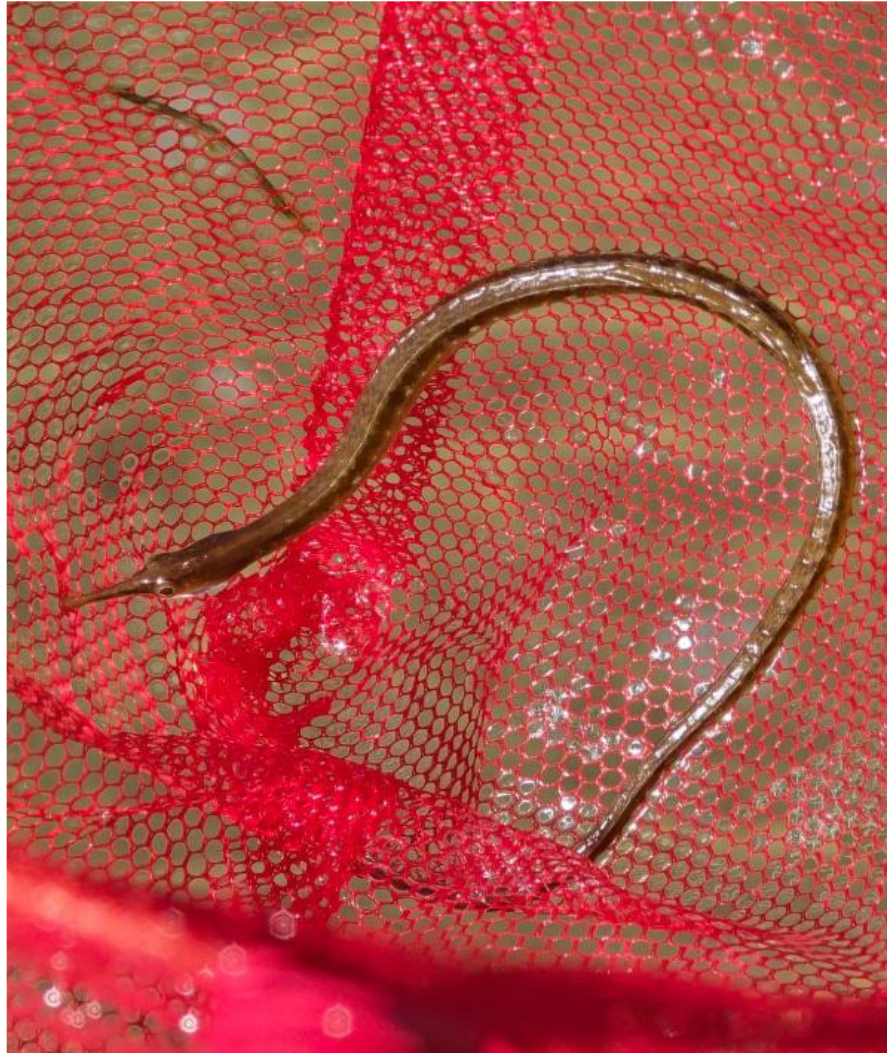
About the Longsnout Pipefish
Scientific Name: Syngnathus temminckii
Range: Coastal waters from Walvis Bay (Namibia) to the Thukela Bank (KwaZulu-Natal)
Appearance: Long, slender body; green to brown with light banding; dorsal fin and delicate tail; no ventral fins
Diet: Small crustaceans and prawns
Unique Feature: Like their seahorse relatives, males carry and birth live young
In 2007, researchers identified this southern African population as genetically distinct from northern
counterparts, confirming it as a locally unique species. Conservation Status and Threats
Predators: Cape cormorants, terns, gulls
Vulnerabilities:
– Habitat loss due to boating activities
– Seabed vegetation damage, vital to pipefish survival
Estuarine Pipefish Alert: A related species, Syngnathus watermeyeri, once thought extinct, has been rediscovered in the Bushmans and Kariega River estuaries. It is now listed as Critically Endangered by the IUCN.
Why This Matters Locally
Our canals, rich in marine life, can serve as important habitat for these estuarine species-but only if properly protected.
This sighting reinforces the importance of preserving aquatic vegetation and being mindful of maintenance and boating impact.
How You Can Help
– Avoid disturbing canal vegetation
– Use boats responsibly in shallow waters
– Report wildlife sightings to the HOA
– Support conservation education in our community
Further informative images
A pipefish being caught be a Cape Cormorant
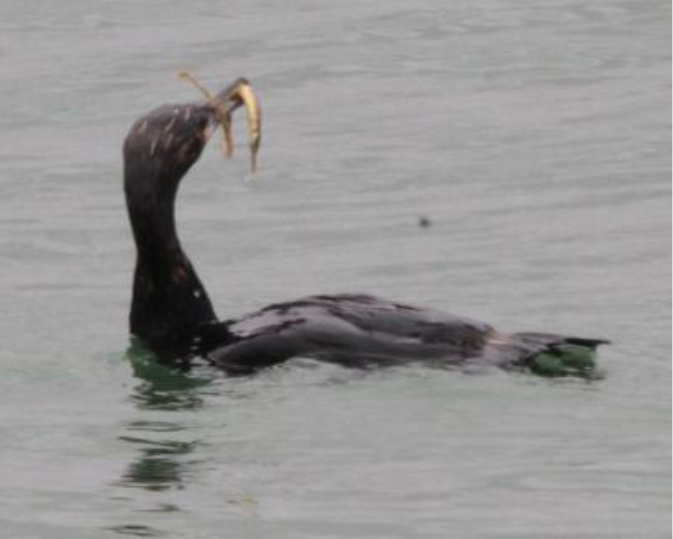
Amended from: Du Toit, J. (15 January 2021) Pipefish
being eaten by a Cape Cormorant. iSpotNature observed
at Laaiplek, Velddrif From:
https://api.ispotnature.org/storage/app/sites/default/files/frontend/74772/202103/cape%20cormorant%20with%20pipe%20fish.JPG
An Estuarine pipefish S. watermeyeri

Note the shorter snout in relation to the head and inflated belly which indicates that this male is pregnant. Photo by Jason Boswell From:
https://www.iucn-seahorse.org/news/2020/3/24/firststeps-to-conserve-the-elusive-critically-endangeredestuarine-pipefish
Further Reading
Claasens, L. (2020). First steps to conserve the elusive estuarine pipefish IUCN Seahorse, Pipefish and Sea dragon Specialist Group From: https://www.iucn-seahorse.org/news/2020/3/24/first-steps-toconserve-the-elusive-critically-endangered-estuarine-pipefish
Mwale, M. (2007). Life in estuaries: Pipefish survival. In: Quest 3(4) p.12-14. Accessed on Sabinet Journals
6 May 2025: https://journals.co.za/doi/pdf/10.10520/AJA1729830X_85
Two Oceans Aquarium (2025). Longsnout pipefish – Syngnathus temminckii. From:
https://www.aquarium.co.za/foundation/animals/longsnout-pipefish